


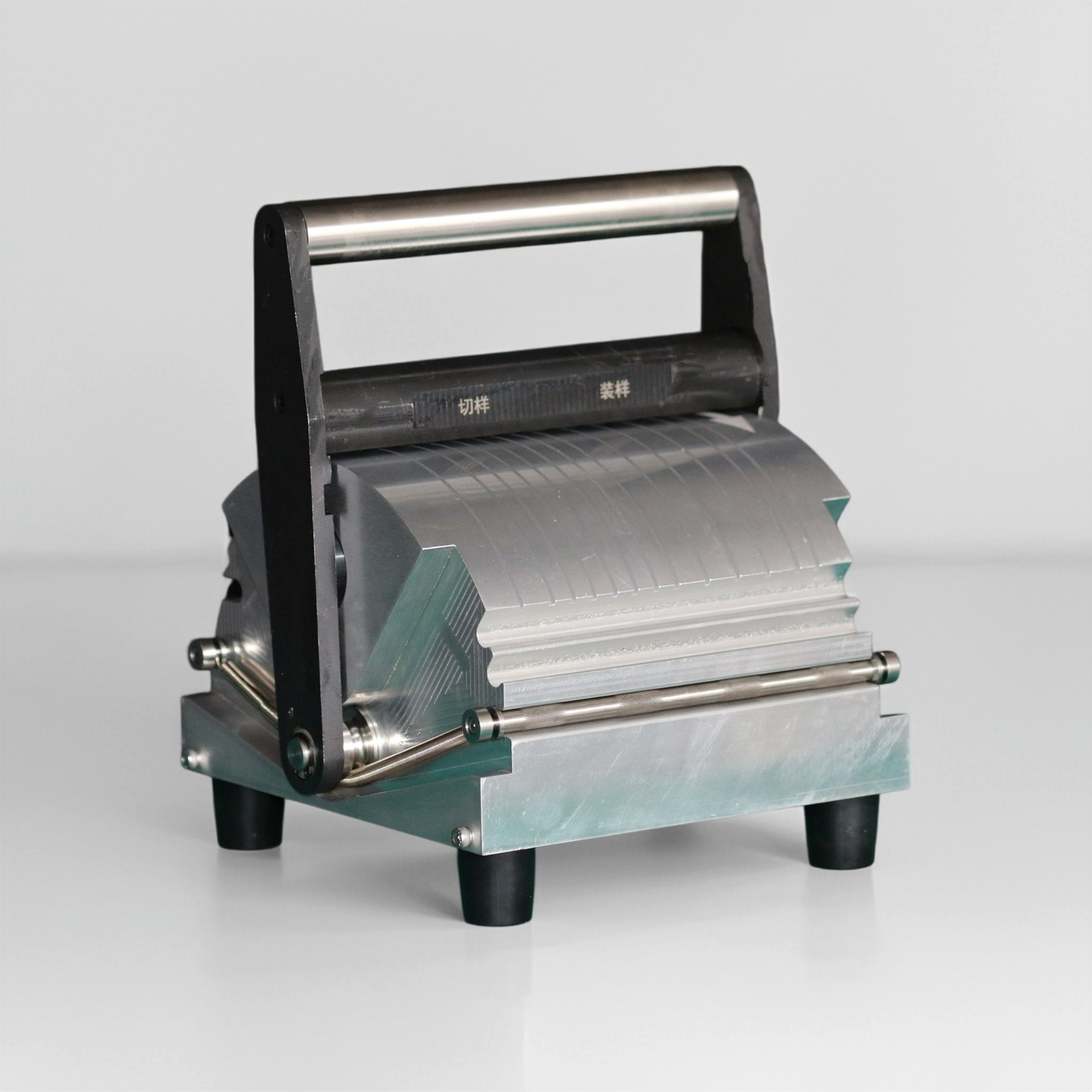
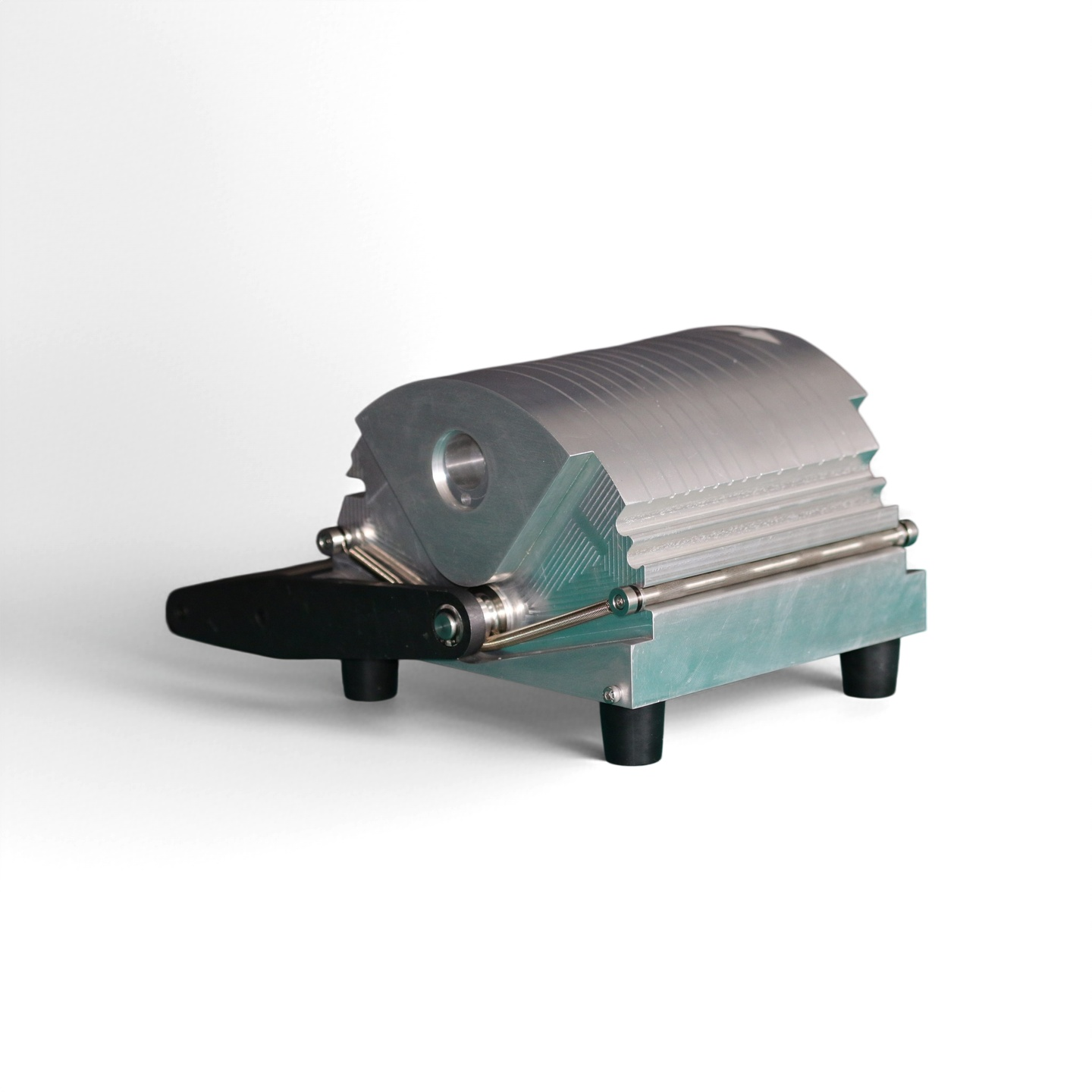
Cutter for Cutting Thin Plastic Film
Model: SL-BM30
Cutting Width of Samples: 10 mm, 15 mm, 25 mm, 25mm (customizable to order)
Cutting Length of Samples: 230 mm
Cutting Thickness: Less than 0.25mm
Dimensions: 340 mm× 240 mm ×170mm
Net Weight: 28 kg
Standards: GB/T1040.3,ISO527-3
Features:
This machine is elegant and durable in appearance, holds plastic film samples securely, and features sharp, easy-to-replace blades. It is simple to operate and safe and reliable to use. It can prepare 12 strips in one pass — 5 strips at 15 mm wide and 7 strips at 10 mm wide. In addition, users can reconfigure the blades as needed to simultaneously cut four types of strips: 10 mm, 15 mm, 20 mm, and 25 mm.
Compared with the stamping method of a die cutter, the film specimen preparation machine produces strips with smooth edges and parallel sides free of defects (no defects observed under magnification), and can produce multiple strips in a single pass. The cut strips ensure that the mechanical properties of the film are not affected. The tensile strength and elongation at break data are accurate, reliable, and highly consistent.
FAQ
Q1: What is the film specimen preparation machine used for? How is it different from a stamping cutter?
The film specimen preparation machine is specialized equipment for preparing plastic film specimens for tensile testing. It precisely cuts film into standard-sized strips for tensile strength, elongation at break, and other tests on a universal testing machine.
The core difference from a stamping cutter: stamping is a punch-forming process that tends to produce burrs and micro-cracks along the edges, resulting in lower test data. The film specimen preparation machine uses rotary cutting, producing strips with smooth edges and parallel sides, free of defects under 20× magnification, yielding more accurate test data.
Q2: What materials and standards does it support?
It is suitable for BOPP, BOPET, BOPA, PE, PP, and other plastic films and composite films, as well as sheet materials such as paper and fabric.
It complies with GB/T 1040.3-2006 / ISO 527-3:1995 Plastics — Determination of tensile properties — Part 3: Test conditions for films and sheets.
Q3: How many strips can it cut at once? What about precision?
It can cut 12 strips simultaneously (5 strips at 15 mm wide + 7 strips at 10 mm wide). Blades can also be configured to cut four widths at once: 10/15/20/25 mm.
Specimen preparation error ≤ ±0.1 mm, cutting thickness ≤ 0.25 mm, strip length 200 mm, meeting the requirements of the vast majority of film mechanical tests.
Q4: Is it difficult to operate? Can beginners use it?
Very simple — three steps: lay the sample → position → cut. No complex parameter settings are required, and ordinary laboratory personnel can operate it independently after brief training.
Daily maintenance is also hassle-free: clean off debris after each use, and replace the blade when it becomes dull. Signs that the blade needs replacing: burrs appear on strip edges, and the debris changes from large pieces to fine powder.
Q5: Can special sizes be customized?
Yes. The standard model comes with a commonly used blade set for 10/15/20/25 mm widths. For special widths or special-shaped specimens, custom-made dedicated blades are supported. We have been making testing equipment for over a decade and can handle both standard products and custom solutions.
Product Inquiry